Monday, October 22, 2012
Cleopatra
Cleopatra is an often-used monarch when talking about woman-rulers. Her rule was mighty, and firm, even though most of the monarchs of her day were men. She ruled because she was smart, not simply because she was pretty.
In the article/essay, 'Becoming Cleopatra' the author decides to introduce race and symbolism into the world of cleopatra. The Author opens the essay by talking about a video involving Eddie Murphy, Michael Jackson. She speaks about the symbolism involved in the video.
Then the author begins to read very heavily into race. She speaks about Cleopatra possibly being black and how this would 'Change' History. How publications would fight to have Cleopatra on their side, for an example of a successful icon of their race. Who cares if cleopatra was black? Except for records of science and perhaps a little of racial history. In the essay, the author explains that both white's and blacks play off of cleopatra's 'racial ambiguity'. It is true that no one REALLY knows what cleopatra looked like, but it is preposterous that one race is trying to 'Take' cleopatra as a point for their 'team'.
Both 'White' and 'Black' culture is something that totally turns me off. I see culture as something that divides, rather than something that unites. If one becomes engulfed in "white culture" for example, than they are more divided than if they involved blacks in this culture as well. I agree that blacks and whites are different, but I dispose culture either way. I believe it excludes and divides.

Henry VIII
 Henry VIII by William Shakespeare, can easily be related to any love affair of modern times. Although a bit more violent, jealousy and a lust for power are common traits in both Shakespeare's man and the modern man. Like most dramas of the today, this play displays a complicated web of dramatic relationships. Between Wolsey, King Henry, The Pope, Katherine, and all those under Cardinal Wolsey.
There are many men in history that get bored with their wives, and there are some now labeled as 'Murderers' who have them killed. Henry is no exception. His secretive relationship with Ann is conflicted because of the relationships they have genetically, but Henry's mind overcomes this.
Henry's royalty allow him to get away with many things that could have gotten killed had he been someone lower on the food chain. The power Kings and Queens possess in King Henry's day is almost absolute. This is a scary thought weather one is Queen Catherine, or a peasant of this day. This power is a large factor in what makes a king or queen. The fact that Henry is able to go against the pope's wishes shows that even though the(supposedly) highest being, or being closest to God, can be thwarted. The pope was a very important figure, and King Henry was simply able to thrust him aside.
Henry VIII by William Shakespeare, can easily be related to any love affair of modern times. Although a bit more violent, jealousy and a lust for power are common traits in both Shakespeare's man and the modern man. Like most dramas of the today, this play displays a complicated web of dramatic relationships. Between Wolsey, King Henry, The Pope, Katherine, and all those under Cardinal Wolsey.
There are many men in history that get bored with their wives, and there are some now labeled as 'Murderers' who have them killed. Henry is no exception. His secretive relationship with Ann is conflicted because of the relationships they have genetically, but Henry's mind overcomes this.
Henry's royalty allow him to get away with many things that could have gotten killed had he been someone lower on the food chain. The power Kings and Queens possess in King Henry's day is almost absolute. This is a scary thought weather one is Queen Catherine, or a peasant of this day. This power is a large factor in what makes a king or queen. The fact that Henry is able to go against the pope's wishes shows that even though the(supposedly) highest being, or being closest to God, can be thwarted. The pope was a very important figure, and King Henry was simply able to thrust him aside.


Jumbo the Elephant
Jumbo the African Elephant, was believed to have been born in the Sudan, and captured by animal traders. His mother was killed, and he was kept in poor conditions until sold to The Jardin des Plantes.
This was a zoo in France. Although they were quite a large and popular zoo, they did not treat Jumbo the way he should have been. He was housed with the zoo's two asian elephants in a cramped enclosure. As Jumbo was already sick when he arrived at The Jardin des Plantes, the lack of knowledge of African Elephants did not help his health. He became lethargic and malnourished. The Zoo soon acquired a new African Elephant calf, and Jumbo was all but forgotten.
Jumbo was then sold to The Zoological Garden's in England. There, he was better cared for and met his trainer and long time friend, Matthew Scott. The Zoo in England became quite attached to Jumbo, despite some disagreements they may have had with some of his actions. Jumbo quickly gained weight and height, with his new and dedicated caretaker. Jumbo gave rides around the Zoological Gardens to children for a penny, and soon became a popular attraction at the zoo. He was also given a 'Mate' named Alice (Also an African Elephant) although no chemistry was seen between them.
As Jumbo aged, and became larger and larger, he was getting a bit hard to handle. He would have bouts of rage associated with adolescence and a fear of small spaces. PT Barnum was in the market for a large African Elephant, and heard of Jumbo's massive size. He had to have him. So he wrote Mr. Bartlett (the head of the Zoo) and offered a large sum of money for Jumbo. The offer was accepted, and Jumbo was packed away in a large crate.
(I haven't finished Jumbo's Biography... So I don't know the details of what happened next... But I will know =D And I will update my blog when I find out
-- So long =)
This was a zoo in France. Although they were quite a large and popular zoo, they did not treat Jumbo the way he should have been. He was housed with the zoo's two asian elephants in a cramped enclosure. As Jumbo was already sick when he arrived at The Jardin des Plantes, the lack of knowledge of African Elephants did not help his health. He became lethargic and malnourished. The Zoo soon acquired a new African Elephant calf, and Jumbo was all but forgotten.
Jumbo was then sold to The Zoological Garden's in England. There, he was better cared for and met his trainer and long time friend, Matthew Scott. The Zoo in England became quite attached to Jumbo, despite some disagreements they may have had with some of his actions. Jumbo quickly gained weight and height, with his new and dedicated caretaker. Jumbo gave rides around the Zoological Gardens to children for a penny, and soon became a popular attraction at the zoo. He was also given a 'Mate' named Alice (Also an African Elephant) although no chemistry was seen between them.
As Jumbo aged, and became larger and larger, he was getting a bit hard to handle. He would have bouts of rage associated with adolescence and a fear of small spaces. PT Barnum was in the market for a large African Elephant, and heard of Jumbo's massive size. He had to have him. So he wrote Mr. Bartlett (the head of the Zoo) and offered a large sum of money for Jumbo. The offer was accepted, and Jumbo was packed away in a large crate.
(I haven't finished Jumbo's Biography... So I don't know the details of what happened next... But I will know =D And I will update my blog when I find out
-- So long =)
Switching Thesis Themes!
After Woodruff scared one of the pictorial problems teachers by saying "They're not kings or queens unless they had power over people" -- that scared teacher told my teacher, and of course she got panicked, and actually Called Woodruff.
He was not thrilled with the idea of me doing my thesis on Charles Darwin, and suggested another King for me to do my thesis on.
Thus, my new thesis topic was born.
Jumbo the Elephant as : King of Elephants
He was not thrilled with the idea of me doing my thesis on Charles Darwin, and suggested another King for me to do my thesis on.
Thus, my new thesis topic was born.
Jumbo the Elephant as : King of Elephants
Monday, October 8, 2012
Trajal Harrell

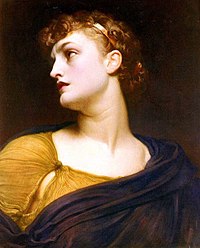
The ideas behind The performance by Trajal Harrell that I saw on monday night are far from simple. The couple that can be found are "What would have happened in 1963 if someone from the voguing ball scene in Harlem had come downtown to perform alongside the early postmoderns at Judson Church?" and "Can a Greek Tragedy such as 'Antigone' be done by voguing?". Because I have little background knowledge in voguing, postmodern dance, or Greek tragedy, it is hard for me to discuss the ideas behind the performance.
What I can take from this experience is the way in with Trajal experiments with different dance media to convey a story. As an Illustrator, I am constantly surrounded by competition, and it is important to be innovative and creative. People will always be looking for "the next big thing" and simply doing what you've done before won't cut it. The experimental nature of the performance was the aspect that captured me the most.
Although it was hard to understand with no background knowledge of the tragedy of Antigone, it is also possible that because I did not see or read about Trajal's other performances in the series (Large, Ex Large etc.). They were talked about as more elaborate than the one I watched in St. Marks' Church.
Monday, September 24, 2012
King Arthur and His Knights of the Round Table

"King Arthur and his Knights of the Round Table" by Roger Lancelyn Green is a compellation of tales from the life of King Arthur. It includes what are believed to be “real” accounts and fictional accounts of his life. Because the thesis theme for this year is “Historical” kings and queens, it is hard to relate this week’s reading to our thesis themes. Although it is difficult to relate to our actual thesis projects, the novel has some interesting themes including, chivalry, brotherhood, magic, and adventure.
In this adventure we call thesis, nothing is irrelevant. Ideas can be taken from all parts of life to help us grow and develop as people and as artists. One of the important themes mentioned above is brotherhood. My peers will be an excellent resource in working through my thesis. They will not only be able to provide me with useful feedback on my artwork, but different takes on my story etc. Thinking about thesis as a competition to get into a show, or impress the department chair will get me no where. Simply rejecting ideas is not an option. Not only should I be open to the ideas of my peers, but I should also be willing to help them in return.
Subscribe to:
Posts (Atom)